TROUBLESHOOTING · October 08, 2026 · Sanzhu Engineering Team
When a seal fails, the failed part itself is the best diagnostic tool you have. The shape of the damage — flat spots, nibbled edges, cracks, swelling — points directly at the root cause. Here are the five failure modes we see most often in the field, what each one looks like, and how to prevent it.
Before diving into the modes, one habit that pays off: document every failure. Photograph the damaged ring next to a ruler, note the fluid, temperature, pressure, and how long the seal lasted. A supplier can diagnose most failures from a clear photo plus those four facts — without them, even the best engineer is guessing. Keep the failed part too; hardness and swelling can still be checked after removal.
1. Compression set: the ring goes flat
What you see: the cross-section has flattened on the sides that sat in the groove, and the ring no longer springs back when removed. Root cause: heat aging or a compound operating too close to its temperature limit — the rubber has lost its elasticity. Prevention: choose a compound rated for the real operating temperature with margin to spare, keep static squeeze in the 15–30% range, and consider FKM or silicone where NBR is marginal.
2. Extrusion: nibbled edges
What you see: small bites or feathered edges chewed away on the low-pressure side of the ring. Root cause: system pressure is forcing the rubber into the clearance gap between mating parts — the gap is too large for the pressure, or the material is too soft. Prevention: move to a harder compound such as 90 Shore A, add backup rings on the low-pressure side, or reduce the extrusion gap by tightening machining tolerances.
3. Abrasion: worn, shiny flats
What you see: polished flat spots on the dynamic surface, sometimes with fine scratches running in the direction of motion. Root cause: this is a dynamic-seal problem — rough mating surfaces, inadequate lubrication, or contaminated fluid grinding the ring down. Prevention: improve the surface finish of rods and bores, make sure lubrication reaches the seal, and fit wipers to keep abrasive particles out of the system.
4. Chemical attack: swelling, softening, cracking
What you see: the ring has swollen, gone soft and gummy, or developed surface cracks. Root cause: the fluid is chemically incompatible with the compound — the classic material mismatch. Prevention: always check chemical compatibility before specifying a compound, and re-check whenever the system fluid changes. When in doubt, send us the fluid name and we will verify it against compatibility data before quoting.
5. Spiral failure: twisted and cut
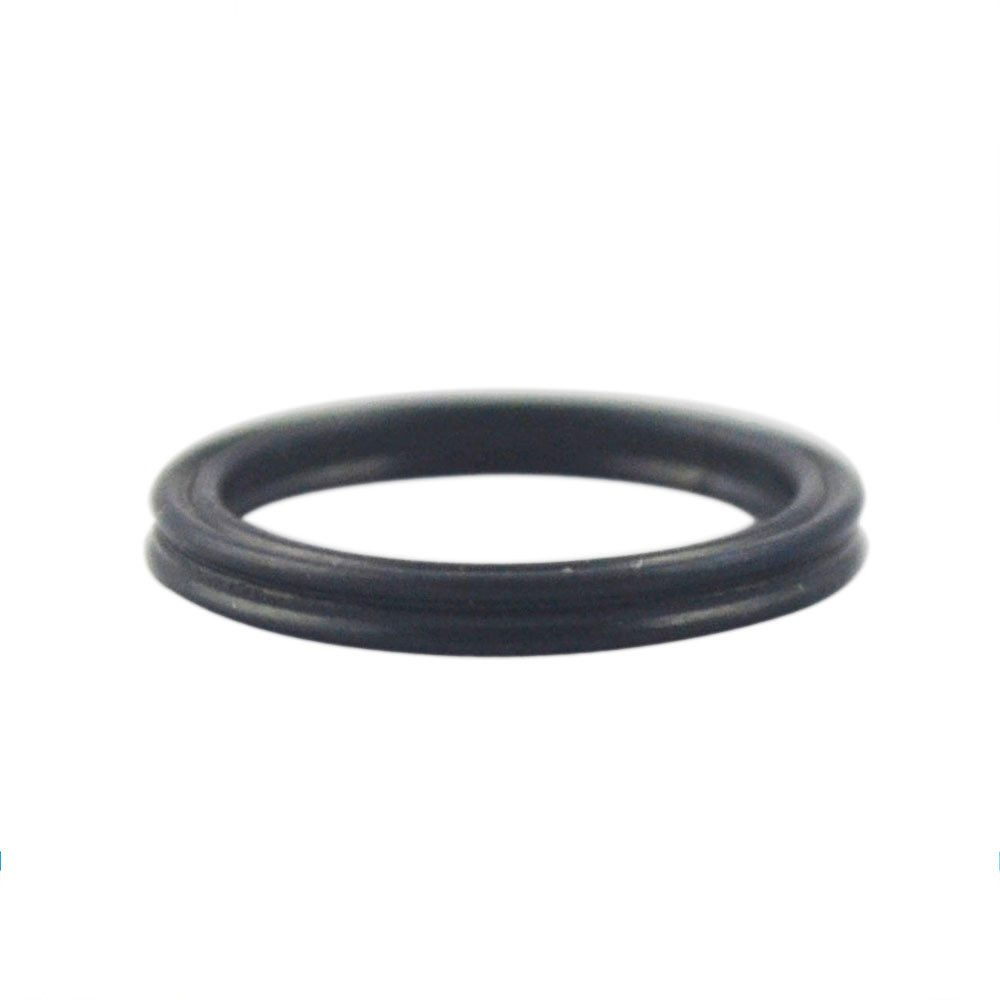
What you see: spiral-shaped cuts running at roughly 45 degrees around the circumference. Root cause: the ring twisted during installation or rolled in long-stroke reciprocating service until it cut itself. Prevention: lubricate generously during installation, avoid rolling rings down long bores, and for reciprocating applications consider switching to an X-ring, whose four-lobed profile strongly resists twisting.
When one fix is not enough
Sometimes two modes overlap — a chemically weakened ring, for example, extrudes at pressures it once survived. When the obvious fix does not hold, step back and check the combination: fluid compatibility first, then temperature margin, then mechanical factors like gap and finish. Upgrading the compound often solves what a harder version of the wrong compound cannot. And if the same seal fails the same way twice, treat it as a system problem, not a part problem — the answer is in the application data, not in a tougher ring.
Quick diagnosis table
| Failure mode | What you see | Usual root cause | First fix to try |
|---|---|---|---|
| Compression set | Flattened cross-section | Excess heat, wrong compound | Higher-temp compound |
| Extrusion | Nibbled low-pressure edge | Gap too large for pressure | Backup ring, harder compound |
| Abrasion | Shiny worn flats | Rough surface, no lubrication | Better finish, wipers |
| Chemical attack | Swelling or cracking | Incompatible fluid | Compatibility check, new compound |
| Spiral failure | 45° spiral cuts | Twisting in service | X-ring, install with lube |
Most repeat failures are not bad luck — they are an untreated root cause. Fix the cause and the next ring lasts.